


To improve ROI in Google Ads, we focus on disciplined cost control (including cost caps), smarter audience observation to uncover high-performing segments, and automation that reacts quickly as performance shifts. We also connect campaign metrics to business outcomes, refine targeting based on what the data proves, and protect efficiency with clear guardrails for bidding and spend.
Google Ads can deliver strong ROI, but only when the campaign is run like a system: you control costs, learn from audience behavior, and let automation do the repetitive work—without losing sight of profitability.
What We Learned Running This Type of Campaign
When we run campaigns designed to lift ROI, we stop guessing and start building a learning loop. First, we keep delivery efficient with a predictable spend structure. Then we test audience behavior using observation so we can see who actually responds when they are not forced into a narrow bucket. Finally, we use automation to keep the campaign aligned with targets, but we still audit results regularly to ensure the platform’s “best guess” matches your business reality.
We’ve found that most ROI improvements come from small, consistent adjustments: tightening cost control, acting on conversion patterns from observation, and preventing the campaign from scaling into the wrong traffic. The “free wins” usually appear when you observe more than you narrow—then promote what works and pause what doesn’t.
Fundamentals of Google Ads for Boosting ROI
ROI is ultimately about profit relative to ad spend. In Google Ads, you get there by balancing three drivers: cost, conversion rate, and conversion value. If your CPCs rise but conversion value rises even more, ROI can still grow. If your conversion rate collapses, ROI will suffer no matter how low your CPCs are.
That’s why we treat every campaign change as a test that affects at least one of those drivers. A practical example: if you want higher ROI, you don’t only raise bids—you also ensure you’re not buying expensive clicks from audiences that will not convert.
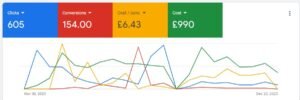
Cost control is the easiest lever to move early. If your bids float upward, you may get more clicks—but the clicks may not be profitable. This is exactly why we recommend pairing performance goals with spending limits. If you want a simple rule to follow, read Google Ads Tip #1 – Never Run Good Ad without a Cost Cap and apply it to your own structure.
Observation vs. narrowing: the “free win” mindset
Observation audiences are how you discover what the market is already telling you. With observation, you can let Google see which segments respond while still keeping the primary targeting broad enough to collect enough data. Narrowing is useful when you already know the winning segment. But when you narrow too early, you can choke learning and delay ROI improvement.
Here’s how we think about it:
- Start broad with observation to find patterns in conversions and conversion value.
- Promote the winners by increasing focus on segments that clearly outperform.
- Remove the losers by reducing bids or excluding audiences that consistently generate poor value.
This is where “free” wins come from—because the platform gives you insight before you force the traffic into a smaller box.
Effective Budget Management Techniques for Enhanced ROI
Budgeting for ROI is not just about setting a number. It’s about preventing turbulence. Campaigns that constantly swing between under-delivery and over-delivery often struggle to stabilize conversion performance, which makes ROI harder to improve.
We use a simple budgeting discipline:
- Define a cost ceiling based on your target cost per conversion or your acceptable CPC range.
- Allow enough headroom so the algorithm can find profitable routes, but not so much that it can ignore efficiency.
- Track value, not vanity metrics—a higher click rate means little if conversion value doesn’t follow.
In practice, when performance dips, we first check whether the campaign is overspending relative to the ROI objective. Then we decide whether to adjust bids, refine targeting, or update the landing experience.
When “best” bidding settings don’t lead to ROI
It’s tempting to assume that maximizing conversions will always increase profitability. Sometimes it does. Other times it pushes budget toward lower-value conversions and erodes ROI. If you’ve ever seen conversions rise but profit doesn’t, this is the moment to rethink the objective.
For an important perspective, see Google Ads Tip #4 – When Maximize Conversions Doesn’t Make Sense and compare your conversion goals to the actual value you generate.
Targeting Audiences for Higher Conversions and Improved ROI
Audience targeting is how you decide who gets your message. But for ROI, the real question is: who gets you profitable outcomes? Observation audiences help answer this without immediately restricting delivery.
We start by building observation segments that reflect realistic buying paths:
- People showing signals consistent with product interest
- Visitors and recent engagers who are closer to intent
- Segments aligned with specific offer types (e.g., demo vs. purchase)
Then we monitor results with a focus on conversion value and not only conversion counts. If one segment has a lower conversion rate but generates much higher value, it can still be the better ROI choice.

Once we identify the strongest segments, we shift them into a more prominent role—either by increasing bids on those audiences or by using more targeted campaigns that mirror what worked in observation.
Avoiding the most common audience mistake
One issue we frequently see is treating observation like it’s “set and forget.” Observation only creates ROI value when you act on it. If you never promote winners or exclude persistent underperformers, the campaign continues to spend on traffic that looks good superficially but doesn’t pay off.
Before you expand your audience strategy, read Google Ads Tip #3 – Google Ads Fools You. It’s a strong reminder that numbers can mislead when you don’t compare performance to value.
Leveraging Automation and Advanced Strategies for Better ROI
Automation helps your campaign respond faster than manual adjustments—especially when conversion performance changes day to day. But automation doesn’t replace oversight. For ROI, we want automation to manage execution while we manage direction and guardrails.
What automation should do:
- Adjust bids to stay within your efficiency limits
- Use conversion signals to improve delivery over time
- React quickly when winning segments shift
What automation should not do:
- Spend freely outside your ROI guardrails
- Scale toward segments that generate low-value conversions
- Hide underperformance without clear review cycles

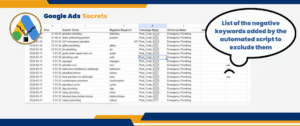
We also like to use scripts and automated processes to reduce repetitive manual work. For example, automation can help keep ad assets consistent with your offer calendar, or trigger checks when performance changes. This is especially useful when you run multiple campaigns and need to maintain ROI discipline across all of them.
Operational workflow that supports ROI
Here’s a workflow we’ve used successfully for ROI-focused accounts:
- Daily check: confirm spend is aligned with the plan and conversion tracking is stable.
- Weekly review: evaluate observation audiences and performance by segment.
- Bi-weekly action: promote high ROI audiences, pause low ROI audiences, and update bids where necessary.
- Landing review: if conversion rate is stagnant, test message alignment and page friction.
Even the best targeting will struggle if the landing experience fails to match user intent.
Real-World Applications and Best Practices to Maximize ROI
In practical terms, ROI improvements usually come from one of three patterns:
- Lower cost per profitable conversion (efficiency gain)
- Higher conversion value (better offer-market fit)
- Stronger conversion rate (better message and landing alignment)
When we’ve seen these patterns, they often tie back to disciplined audience observation and consistent cost control. One common scenario is a campaign that starts broad, then gradually becomes more profitable as we learn which audience signals create the best conversion value.
To scale these gains, we repeat the cycle: observe → learn → adjust → measure ROI impact, not just conversion counts.
A Holistic Approach to Google Ads for Maximum ROI
ROI is rarely fixed in one place. We get the best results when the entire funnel works together:
- Campaign structure that supports learning (observation first, narrowing later)
- Ad messaging that matches the offer and the audience intent
- Landing experience that reduces friction and reinforces the promise
- Bid and budget rules that protect efficiency as spend grows
To complement your analysis, you can use measurement frameworks that help you think in value terms. Tools like Moz and editorial resources from Search Engine Journal can support your planning process, especially when you connect ad performance insights with broader marketing decisions.

Staying Current with the Latest Google Ads Tips for Better ROI
Google Ads changes, competitor behavior changes, and customer intent changes. If you want ROI to hold steady, you must keep iterating. We recommend reviewing new tactics and lessons regularly and then applying them only when they make sense for your account.
Here are a few internal resources that consistently help teams protect ROI:
Also, conversations on platforms like Reddit and Quora can reveal practical issues real advertisers face—especially around audience behavior, conversion tracking, and bidding stability. External directories can help if you’re targeting region-specific markets where intent varies.
Expanding Your Knowledge with Online Courses for Improved ROI
If you want ROI improvements you can repeat, invest time in structured learning. Courses on platforms like Coursera, Udemy, and Edraak often help you build a stronger foundation in campaign building, measurement thinking, and iterative optimization.
Once you understand the fundamentals, you can spend less time troubleshooting and more time improving results. If you want personalized guidance for your specific setup, you can reach out through our WhatsApp link or connect with us on LinkedIn.

Conclusion
ROI improvements in Google Ads come from disciplined cost control, observation-driven audience learning, and automation used with clear guardrails. When we combine these elements—then review performance by value—we consistently find the segments and behaviors that make the account profitable. Keep iterating, measure what actually moves ROI, and your campaigns will get smarter with every cycle.
Frequently Asked Questions
How long should we run audience observation before making changes to improve ROI?
We typically wait long enough to collect meaningful conversion data from observation segments—often at least 1–2 weeks, but the exact time depends on your conversion volume and traffic share. If your account converts frequently, you can act sooner; if conversions are rare, you need more time to avoid making decisions based on noise. The key is to change things only when you can clearly compare segments on value per click or conversion value per impression.
What’s the best way to control spend without sacrificing ROI performance?
We recommend using cost control that matches your profitability target: set spending limits or cost caps that prevent bids from drifting into inefficient traffic, but leave enough room for the algorithm to find profitable routes. Then monitor conversion value trends. If spend is rising faster than value, ROI will decline—so you should adjust bids, refocus audiences, and review landing page alignment before increasing budget.
Why might conversions increase while ROI still goes down?
This usually happens when the campaign starts capturing more traffic that converts, but not at a profitable value level. Common causes include shifting toward lower-value conversion actions, audience drift, or bidding toward cheaper leads that convert less efficiently in terms of revenue. Compare conversion value and value per click across the same time period, and confirm that your conversion tracking reflects the outcomes that matter to your business.