
Google Ads Targeting Options: Complete Guide for 2025
Google Ads Targeting Options: Complete Guide for 2025
Understanding all the available Google Ads targeting options is one of the most important steps in building successful ad campaigns. Targeting determines which users see your ads, how relevant your message is, and how efficiently your advertising budget is spent. Whether you’re running search, display, video, or Performance Max campaigns, mastering targeting is essential for improving ROI and keeping your cost-per-click (CPC) low.

What Are Google Ads Targeting Options?
Google Ads targeting options let advertisers choose who sees their ads based on factors like search behavior, demographics, interests, location, or past interactions with a brand. Because Google processes over 8.5 billion searches per day, the platform uses massive data signals to deliver highly accurate targeting.
In 2025, Google continues to enhance its AI-powered audience signals, providing advertisers with deeper insights and more refined targeting capabilities.
1. Keyword Targeting
Keyword targeting remains the foundation of search campaigns. Ads appear when users search for keywords related to your business.
Match types include:
- Exact Match: Most precise targeting.
- Phrase Match: More flexible but still controlled.
- Broad Match: AI-driven, widest reach.
Choosing the right match types helps balance reach, cost, and relevance. Many advanced advertisers combine broad match keywords with smart bidding for strong performance.
2. Audience Segments
Google Ads gives you access to powerful audience segments based on interests, demographics, and user intent.
Affinity Audiences
Users with long-term interests like fitness, travel, finance, gaming, etc.
In-Market Audiences
Users actively researching or ready to buy—one of the most effective Google Ads targeting options.
Custom Segments
You can create custom audiences using:
- Keywords users search for
- Websites users visit
- Apps users use
Custom intent and custom affinity audiences are among the strongest targeting methods for reaching high-quality prospects.
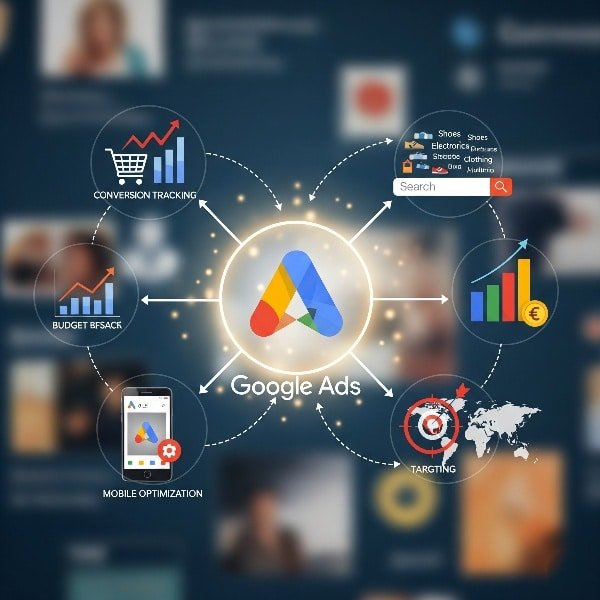
3. Demographic Targeting
Demographic filters help advertisers show ads to users based on age, gender, parental status, and household income.
Supported demographics include:
- Age groups
- Gender
- Parental status
- Household income tiers (U.S. only)
This targeting is ideal for brands that know exactly who their ideal customer is.
4. Location & Geo Targeting
Location-based targeting allows businesses to focus ads on users in specific geographic areas.
Options include:
- Countries
- Regions or states
- Cities
- Zip codes
- Radius targeting (1–500 miles)
This is especially important for local businesses like restaurants, dentists, and service providers.
5. Device Targeting
Advertisers can choose to focus on mobile, desktop, tablet, or TV screens. This is useful when certain devices perform better or when mobile-specific conversion paths are important.
6. Remarketing & Retargeting
Remarketing is one of the most profitable Google Ads targeting options, allowing you to re-engage users who have already interacted with your website or app.
Types of remarketing include:
- Website remarketing
- App remarketing
- YouTube remarketing
- Customer list remarketing
Since these users already know your brand, conversion rates are often much higher.
7. Placement Targeting
Placement targeting gives advertisers control over where their display or video ads appear, such as specific websites, YouTube channels, or apps.
This is ideal for businesses wanting complete control over brand placement or industry relevance.
8. Topic Targeting
You can target ads to users browsing content related to specific topics, such as finance, travel, health, or sports. This is especially effective for display and YouTube campaigns.
How to Choose the Right Google Ads Targeting Options
Choosing the right targeting depends on your business goals, audience behavior, and campaign type. Here’s a quick guide:
- Use keyword + in-market audiences for high-intent users.
- Use custom segments for advanced competitor targeting.
- Use remarketing to maximize conversions.
- Use demographic filters when your product fits a specific group.
- Use geo targeting for local businesses.
Combining multiple targeting layers helps improve campaign efficiency and reduce wasted ad spend.
Final Thoughts
Mastering google ads targeting options is the key to running profitable ad campaigns in 2025. With Google’s AI enhancements and audience insights, advertisers now have more control and precision than ever before. Whether you are focusing on search, display, or video, choosing the right targeting strategy will dramatically improve your ROAS and campaign performance.